
Table of Contents
- Best Custom Furniture Makers 2026: Top Picks Compared
- How We Evaluated the Best Custom Furniture Makers
- 1. Strong Oaks Woodshop: Best for Reclaimed Wood
- 2. Maiden Home: Best for Custom Upholstery
- 3. Simply Amish: Best for Solid Wood Heirlooms
- 4. Copeland Furniture: Best for Modern Sustainability
- 5. Hancock & Moore: Best for Luxury Leather
- Why Choose the Benefits of Reclaimed Wood Furniture?
- Frequently Asked Questions
Last Updated: September 8, 2026
Best Custom Furniture Makers 2026: Top Picks Compared
Choosing the right maker for custom furniture is the difference between a piece that lasts decades and one that ends up on the curb in five years. The best custom furniture makers 2026 have to offer combine genuine craftsmanship, honest materials, and a process that keeps you informed from first sketch to final delivery.
Most buyers shop by style photos instead of by build quality and process transparency. This guide breaks down five of the top custom furniture makers working today, what each does best, and where they fall short, so you can match a maker to your specific project.
Quick Picks:
- Best for Reclaimed Wood: Strong Oaks Woodshop, hand-built, one-of-a-kind pieces with personalized service
- Best for Custom Upholstery: Maiden Home, artisan-made seating from North Carolina
- Best for Solid Wood Heirlooms: Simply Amish, traditional joinery built to last generations
- Best for Modern Sustainability: Copeland Furniture, contemporary design with responsible forestry
- Best for Luxury Leather: Hancock & Moore, premium hand-finished upholstery
How We Evaluated the Best Custom Furniture Makers
We applied a rigorous, five-part framework designed to predict your satisfaction a decade after the purchase. This is not about which maker has the prettiest Instagram feed; it's about which maker has the most robust process for building a piece that will survive daily use, arrive on time, and stand behind their work.
1. Construction Forensics: Beyond the Surface
We examined the structural DNA of each maker's work. Our criteria for a passing grade in construction are non-negotiable:
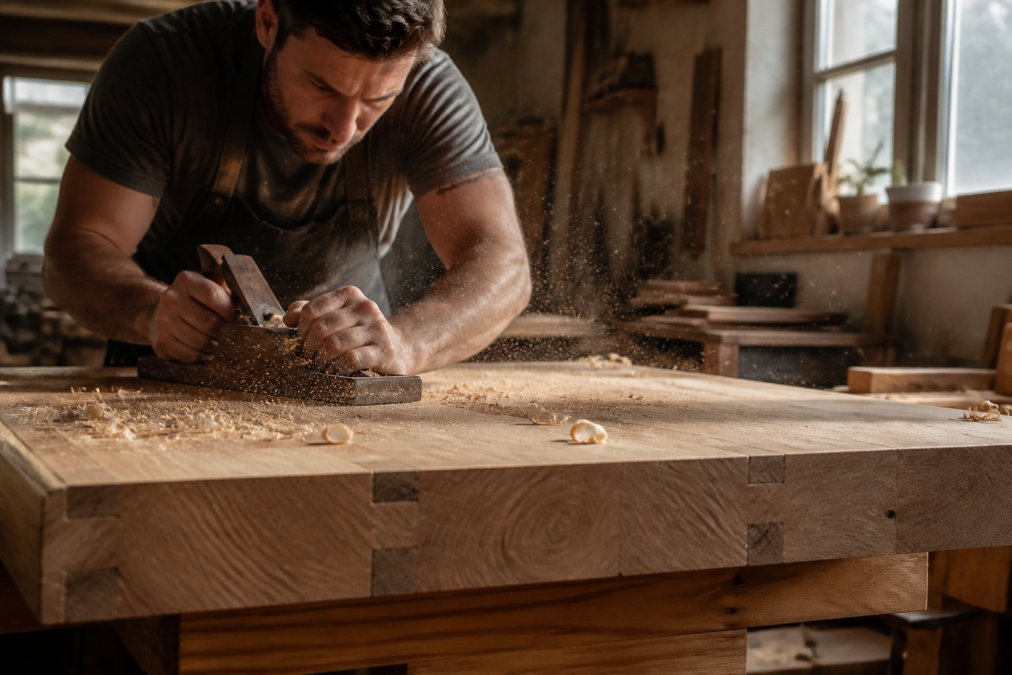
- Joinery: We looked for traditional joinery, dovetails, mortise-and-tenon, and through-tenons, over butt joints reinforced with staples and glue. A dovetailed drawer joint is mechanically stronger and can be repaired; a stapled joint cannot.
- Wood Selection: We verified that makers use kiln-dried hardwood. Kiln-drying to a moisture content of 6-8% is essential for stability in heated homes (extension.org). We also checked for the use of solid wood in primary surfaces versus veneer over MDF or particleboard.
- Frame Construction: For upholstered pieces, we looked for kiln-dried hardwood frames with corner-blocked and glued joints, versus frames made from softwood or plywood. We also checked for 8-way hand-tied coil springs in seating, which is the gold standard for durability and comfort.
- Finish Quality: We favored makers who hand-apply and sand multiple coats of finish, rather than relying on a single sprayed-on coat from a production line. A hand-rubbed finish is more durable and can be repaired if scratched.
2. Material Sourcing: The Paper Trail
We asked each maker direct questions about their materials. A passing score required specific, verifiable answers, not marketing jargon.
- Wood Origin: Can they name the specific species and the region it was harvested from? For domestic hardwoods, we looked for certification from the Sustainable Forestry Initiative (SFI) or the Forest Stewardship Council (FSC).
- Reclaimed Wood Safety: For reclaimed wood specialists, we asked for their specific process for handling lead paint, old fasteners, and chemical residues. We looked for a documented de-nailing, metal-detection, and kiln-drying process.
- Upholstery Materials: We asked about the source of foams, fabrics, and leathers. We looked for CertiPUR-US certified foams (which are free of certain flame retardants and heavy metals) and natural fiber options (certipur.us).
3. Customization Flexibility: The 'Bespoke' Test
We distinguished between 'made-to-order' (choosing from a catalog of options) and 'fully bespoke' (building from a blank slate), scoring makers higher for true flexibility.
- Dimension Limits: Can they build a table to fit an awkward 8-foot-2-inch alcove, or are you limited to standard lengths?
- Design Input: Are you allowed to modify a design, or is it a 'take it or leave it' catalog piece? We looked for makers who offer a design consultation to discuss your specific needs.
- Mixed Materials: Can they combine reclaimed wood with a metal base or a stone top? This is a common request that many single-material makers cannot fulfill.
4. Process Transparency: The Communication Audit
We evaluated how each maker communicates from the first inquiry to the final delivery, the most underrated predictor of a successful project.
- Response Time: How quickly did they respond to our initial questions?
- Documentation: Did they provide a written quote with a detailed breakdown of costs? Did they offer a contract that specified the timeline, warranty, and delivery terms?
- Progress Updates: Did they offer photos or updates during the build process? A maker who is proud of their work will want to show you its progress.
- Red Flag Language: We noted any vague answers to questions about lead times, shipping, or warranties. Phrases like 'we'll figure it out later' or 'that's not our problem' were immediate disqualifiers.
5. Longevity and Repairability: The Heirloom Potential
We assessed whether a piece is designed to be repaired or destined for a landfill.
- Repair Philosophy: Does the maker offer a repair service or provide guidance on how to fix minor damage? Do they use joinery that can be disassembled and re-glued?
- Refinishing Potential: Is the piece made of solid wood that can be sanded and refinished, or is it a veneer that cannot be touched up?
- Warranty Terms: We read the fine print. A warranty that covers structural defects for 5+ years is a strong signal of confidence. A warranty that only covers 'manufacturing defects' for 90 days is a red flag.
Print this framework, take it to your consultation, and ask the questions directly.
1. Strong Oaks Woodshop: Best for Reclaimed Wood
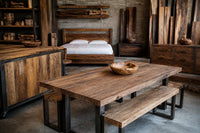
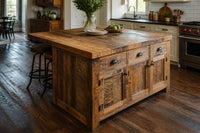
Our top pick for custom furniture is Strong Oaks Woodshop for anyone seeking authentic reclaimed wood pieces. Every item is hand-built to order, meaning your dining table, kitchen island, or bar seating is genuinely one-of-a-kind, cut from timber with a visible history. Since 2008, the shop has completed over 10,000 projects and reclaimed wood from more than 250 barns.
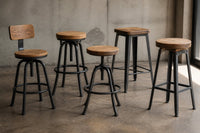
The customization runs deep. Whether you need a butcher block island sized to an awkward kitchen footprint or industrial-style bar stools for a restaurant, the build starts with your dimensions, not a preset template.
Strong Oaks addresses the safety question around reclaimed wood directly, with a cleaning and milling process that prepares each board before it ever reaches your home. With over 2,000 five-star reviews and a track record of on-time shipping and fast communication, this is the safest bet for a smooth commission.
2. Maiden Home: Best for Custom Upholstery
If your project centers on seating, Maiden Home partners with master artisans in North Carolina to produce made-to-order upholstery that rivals far more expensive showrooms. The direct-to-consumer model removes retail markups while keeping the craftsmanship local.
Pricing starts around $450 per item, which is reasonable for custom upholstery built to order (maidenhome.com). The tradeoff is lead time: because each piece is made specifically for you, expect a longer wait than buying off a showroom floor.
Where Maiden Home falls short is material range beyond upholstery. If you need a matching reclaimed wood base or a mixed-material piece, you'll likely work with a second maker, which complicates coordination.
3. Simply Amish: Best for Solid Wood Heirlooms
Simply Amish builds traditional, handcrafted solid wood furniture using sustainable American hardwoods, and the construction quality is genuinely heirloom-grade. Traditional joinery techniques mean these pieces can be repaired and refinished decades from now, which is the real definition of sustainability in furniture.
The customization options are broad, covering dimensions, wood species, and finish choices. The aesthetic, however, stays firmly traditional. If your interior style leans modern or industrial, this maker will feel limited, which is why we do not recommend them for contemporary spaces.
4. Copeland Furniture: Best for Modern Sustainability
Copeland Furniture blends modern design with traditional woodworking techniques from their Vermont workshop. They use sustainably harvested American hardwoods and run environmentally conscious manufacturing processes, which matters if sustainable forestry is a deciding factor for you.
The collections range from mid-century modern to contemporary, offering a sophistication that traditional makers rarely match. The higher price point reflects the premium materials and the design-forward approach. For buyers who want modern lines without sacrificing solid wood construction, Copeland is the strongest option on this list.
The catch is that "custom" here means choosing from defined collections with finish and dimension options, not commissioning a fully bespoke piece. If you need something truly outside their catalog, you will need a different maker.
5. Hancock & Moore: Best for Luxury Leather
Hancock & Moore occupies the top tier of custom leather upholstery, with hand-tufted and hand-finished pieces built on traditional frames designed for maximum durability. Their leather library is extensive, and the quality of the hides is industry-leading.
This is the pick for buyers who view furniture as a long-term investment and prioritize comfort and material quality above all else. The price point is very high, and the aesthetic leans classic rather than contemporary. For a luxury leather sofa that will age beautifully over decades, few makers match their consistency.
Why Choose the Benefits of Reclaimed Wood Furniture?
Beyond the aesthetic appeal, choosing reclaimed wood is a decision with measurable long-term ROI, but only if you understand the full lifecycle of the piece.
The Repairability Dividend: Why Solid Reclaimed Wood Outperforms
The true value of a reclaimed wood piece isn't just in its initial build; it's in its ability to be repaired, refinished, and reimagined decades from now. Mass-produced furniture made from veneer or particleboard is effectively disposable. Solid reclaimed wood offers a 'repairability dividend.'
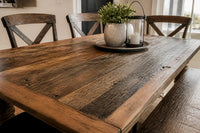
A solid wood tabletop can be sanded and re-oiled multiple times over its life. A loose joint can be re-glued and clamped by a local carpenter. This is the mechanism behind 'heirloom' status: it's not magic, it's material thickness and traditional joinery that allow for future intervention. When comparing quotes, ask the maker if they will provide a care and repair kit, and whether they offer a refinishing service years down the line.
The Hidden Cost of Reclaimed: Milling, Safety, and Stability
The most common buyer mistake is assuming reclaimed wood is inherently cheaper because it's salvaged. The reality is that the cost is in the preparation: de-nailing, removing old fasteners, scanning for metal, and kiln-drying to kill insects and stabilize moisture content. This is why a properly prepared reclaimed table is not a budget option, it's a premium material with a story.
Before you commit, ask the maker to walk you through their milling process. A confident answer will include steps for removing lead paint, addressing chemical residues, and the specific kiln-drying schedule they use. Vague answers are a red flag.
The 'Last Mile' Problem: Logistics for Large Reclaimed Pieces
A 300-pound, 10-foot reclaimed wood dining table is not a UPS package. The 'last mile', getting the piece from the workshop to your dining room, is often where the commission experience breaks down. Most top-tier makers quote a 'white-glove' delivery service that includes a two-person team, a lift gate on the truck, and placement inside your home. A 'curbside' delivery means you are responsible for moving a heavy, fragile item from the street into your house.
Ask these specific logistics questions before signing a contract:
- What is the exact delivery method? (Freight, white-glove, or curbside?)
- Who is responsible for damage that occurs during transit? (The maker should carry insurance and have a clear claims process.)
- What happens if the piece doesn't fit through the door or around a tight corner? (A professional maker will ask for doorway and stairwell measurements during the design phase to mitigate this risk.)
- Is assembly included? (For items with legs or bases that need to be attached, this is a critical question.)
The Contract: Your Protection Against Scope Creep and Delays
A custom furniture commission is a significant financial transaction deserving a contract that protects both you and the maker. A clear contract is the single best tool for a smooth project and should explicitly state:
- Detailed specifications: Dimensions, wood species, finish, and joinery type.
- A fixed price or a clear change-order process: If you request a change mid-build, the contract should define how that affects the price and timeline.
- A production timeline with milestones: When will the design be finalized? When does the build start? When is the expected completion date?
- A delivery and damage policy: Who is responsible for what during transit?
- A warranty clause: What is covered (e.g., structural defects, finish issues) and for how long? What is not covered (e.g., normal wear and tear, damage from improper care)?
- A dispute resolution process: What happens if you and the maker disagree on the final outcome?
A maker who is transparent about their process will welcome these questions; a maker who hesitates is signaling they may not have a robust process in place.
Frequently Asked Questions
Is custom-made furniture worth the investment in 2026?
Yes, if you value longevity and unique design. Mass-produced pieces often use veneers and particleboard that fail within a decade. Custom furniture makers use solid hardwoods, kiln-dried lumber, and traditional joinery like dovetail joints, creating pieces built to last generations. You also get custom dimensions to fit your space perfectly, eliminating the gaps you get with store-bought items. While the upfront cost is higher, the per-year cost of a well-made custom piece is often lower than replacing cheaper furniture multiple times.
How long does it take to have custom furniture built?
Lead times vary significantly by maker and project complexity. A simple custom table from a smaller shop might take 4-8 weeks. More complex pieces, like a fully upholstered sofa from other providers, can take 8-12 weeks due to the made-to-order process. High-end or intricate commissions can take longer. Always ask for a production timeline in writing before you commit. A reputable maker will provide a clear schedule and stick to it, so you are not left waiting indefinitely.
What is the difference between mass-produced and custom-built furniture?
Mass-produced furniture is built quickly in large volumes using cost-cutting methods like veneers over particleboard and stapled joints. Custom-built furniture is made-to-order by skilled craftspeople. It uses solid wood, like hardwood or reclaimed timber, and time-tested joinery for structural integrity. Custom work offers unlimited personalization in dimensions, material sourcing, and finish quality. You are also investing in a piece that is repairable; if it gets damaged, a craftsman can fix it, unlike a factory item that is often discarded.
What should I look for when hiring a custom furniture maker?
Look for transparency in the custom furniture design process and contract. First, review their portfolio to see if their style matches your interior design vision. Ask about their material sourcing, specifically if they use kiln-dried solid wood or sustainable forestry practices. Request a detailed quote that includes the production timeline and delivery logistics. Finally, ask about their warranty and what happens if the piece arrives damaged. A confident maker will have a clear quality assurance process and stand behind their workmanship and materials.